
Christianity Isn’t for the Weak: Stand Firm in Your Faith in a World Against it!
Christianity isn’t for the weak.
It takes courage to stand for Jesus when the world tells you to stay silent. It takes strength to love people who hate you, forgive those who hurt you, and speak the truth when it’s unpopular. But that strength doesn’t come from ourselves. It comes from God.
Look at the world around us today. Division, violence, hatred, dishonesty, false teachings, and the rejection of biblical values seem to be everywhere. Social media has become a battlefield of opinions, where Christians are often called judgmental, hypocritical, hateful, or intolerant simply for expressing their beliefs.
At the same time, some people who claim to represent Christianity behave in ways that are completely contrary to the teachings of Jesus.
So how are Christians supposed to respond? Do we remain silent to avoid offending people? Do we compromise our beliefs to fit into society? Do we argue with everyone who disagrees with us? Or do we stand firm in our faith while showing the same love, mercy, and compassion Jesus showed others?
The Bible gives us the answer.
1 Corinthians 16:13–14 (NIV)
“Be on your guard; stand firm in the faith; be courageous; be strong. Do everything in love.” – 1 Corinthians 16:13-14
These are some of my favorite verses in the Bible because I believe they describe exactly how Christians should live. Be alert. Stand firm. Be courageous. Be strong. And most importantly, do everything in love.
Standing firm in your faith doesn’t mean becoming angry at the world. It means refusing to let the world change your relationship with Jesus.
Bold Christian Faith in a Broken World: Stand for Jesus, Even When It’s Unpopular
The world has never been perfect, and Christians have faced opposition since the earliest days of the church. But today’s culture presents its own challenges.
We live in a world where opinions can spread to millions of people in seconds. Social media often rewards outrage instead of understanding. Biblical teachings are sometimes dismissed as outdated, people can face criticism for believing that Jesus is the only way to heaven and for expressing beliefs that differ from popular culture.
There is increasing pressure to accept whatever society considers normal, even when those beliefs contradict Scripture. But Christians aren’t called to follow society’s changing standards. We are called to follow Jesus.
Romans 12:2 tells believers not to conform to the pattern of this world but to be transformed by the renewing of their minds.
2 Do not conform to the pattern of this world, but be transformed by the renewing of your mind. Then you will be able to test and approve what God’s will is—his good, pleasing and perfect will. – Romans 12:2
John 15:18–19 records Jesus warning His disciples that the world may hate them because they belong to Him.
18 “If the world hates you, keep in mind that it hated me first. 19 If you belonged to the world, it would love you as its own. As it is, you do not belong to the world, but I have chosen you out of the world. That is why the world hates you. – John 15:18-19
2 Timothy 3:12 warns that those who desire to live godly lives in Christ Jesus will face persecution.
12 In fact, everyone who wants to live a godly life in Christ Jesus will be persecuted, – 2 Timothy 3:12
And in John 16:33, Jesus reminds His followers that they will experience trouble in this world, but they can take heart because He has overcome it.
33 “I have told you these things, so that in me you may have peace. In this world you will have trouble. But take heart! I have overcome the world.” – John 16:33
Standing Firm in Your Christian Faith Doesn’t Mean Everyone Will Like You
Following Jesus may cost you popularity, friendships, opportunities, or approval.
You may be criticized for believing that Jesus is the only way to heaven. You may be mocked for believing that sin is real, repentance is necessary, and God’s Word still applies today. Even friends or family members may disagree with your convictions.
But our faith cannot depend on whether people approve of us.
Galatians 1:10 challenges believers to consider whether they are seeking the approval of people or serving Christ.
10 Am I now trying to win the approval of human beings, or of God? Or am I trying to please people? If I were still trying to please people, I would not be a servant of Christ. – Galatians 1:10
We should never deliberately create conflict, but neither should we abandon biblical truth simply to make ourselves more acceptable to the world.
The goal of Christianity isn’t popularity. It’s faithfulness to Jesus Christ.
When the World Turns Against Your Faith, Stand Firm
There are arrows coming at Christians from every direction. Some come through criticism, ridicule, temptation, and pressure to compromise our beliefs. Others come through false teachings, spiritual doubt, fear, discouragement, and the constant distractions of everyday life.
But Scripture reminds us that our greatest battle isn’t against the people who disagree with us.
Put On the Full Armor of God — Your Shield Against the Enemy’s Arrows
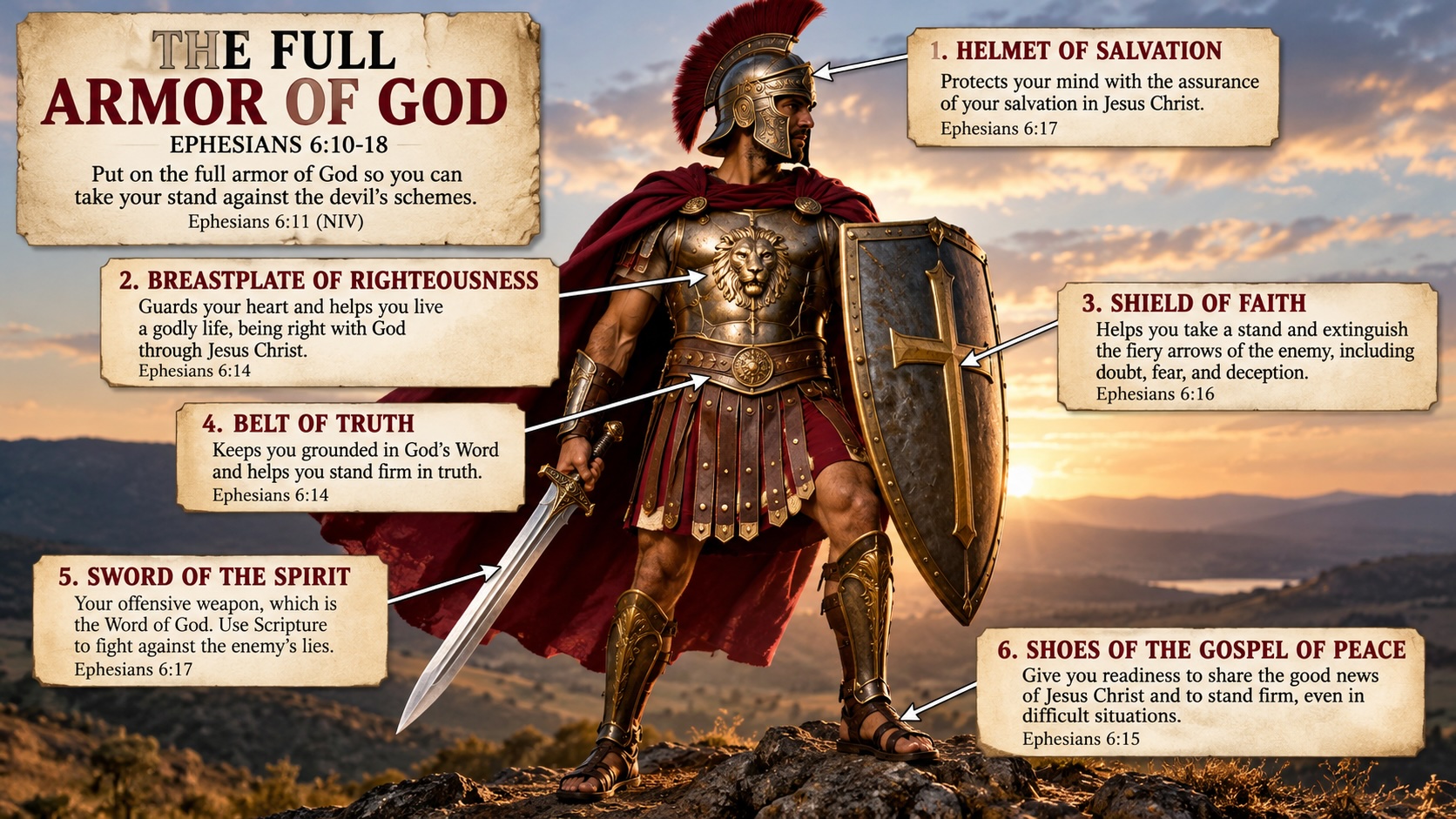
Ephesians 6:10–18 teaches Christians to put on the full armor of God so they can stand against the devil’s schemes.
Paul explains that our struggle is not against flesh and blood, but against spiritual forces of evil. This is important because people who disagree with Christianity are not our enemies. We are called to love them, pray for them, and share the gospel with them.
The full armor of God prepares us to stand firm against spiritual deception and temptation:
1. The Belt of Truth
14 Stand firm then, with the belt of truth buckled around your waist, – Ephesians 6:14
God’s truth holds everything together. When we know Scripture, we are better equipped to recognize lies, deception, and teachings that contradict God’s Word.
2. The Breastplate of Righteousness
with the breastplate of righteousness in place, – Ephesians 6:14
Righteousness protects our hearts. Christians should pursue a life that reflects God’s character rather than deliberately continuing in sin.
3. Feet Fitted With the Gospel of Peace
15 and with your feet fitted with the readiness that comes from the gospel of peace. – Ephesians 6:15
We are called to share the good news of Jesus Christ. Our message should bring people toward reconciliation with God, not encourage unnecessary hostility.
4. The Shield of Faith
16 In addition to all this, take up the shield of faith, with which you can extinguish all the flaming arrows of the evil one. – Ephesians 6:16
Ephesians 6:16 describes the shield of faith as protection against the flaming arrows of the evil one. These arrows can take the form of temptation, doubt, fear, discouragement, or deception. Faith doesn’t mean we never struggle. It means we continue trusting God even when life becomes difficult.
5. The Helmet of Salvation
17 Take the helmet of salvation – Ephesians 6:17
Our salvation through Jesus Christ reminds us of the hope we have in Him. Our identity should be rooted in Christ rather than the opinions of the world.
6. The Sword of the Spirit
and the sword of the Spirit, which is the word of God. – Ephesians 6:17
The sword of the Spirit is the Word of God. When Satan tempted Jesus in the wilderness, Jesus responded with Scripture (Matthew 4:1–11). He didn’t negotiate with temptation or change God’s Word to make it more convenient. He stood firm in the truth.
7. Pray in the Spirit
18 And pray in the Spirit on all occasions with all kinds of prayers and requests. With this in mind, be alert and always keep on praying for all the Lord’s people. – Ephesians 6:18
Paul also emphasizes prayer in Ephesians 6:18. We need continual prayer, wisdom, and dependence on God to remain spiritually strong.
The Armor of God Is for Spiritual Warfare, Not Attacking People
Putting on the armor of God doesn’t give Christians permission to insult, humiliate, or mistreat people.
- Someone who doesn’t believe in Jesus isn’t our enemy.
- Someone who struggles with sin isn’t our enemy.
- Someone who questions Christianity isn’t our enemy.
Our battle is against spiritual evil, not against the people Jesus came to save.
The shield of faith protects us from the enemy’s arrows. It isn’t a weapon for attacking the people we’re called to love.
Called Judgmental, Labeled Hypocrites: What Jesus Really Expects of Christians
One of the most common criticisms we hear today is Christians being judgmental. People often respond to biblical teachings about sin by saying, “Only God can judge me,” or “Jesus said not to judge.” But what does Jesus actually teach?
Is Calling Out Sin the Same as Judging Someone?
Not necessarily. There is a difference between recognizing behavior that contradicts Scripture and condemning someone as a person.
For example, saying that dishonesty, adultery, hatred, or stealing violates God’s commandments is not automatically an act of hateful judgment. But treating someone as worthless, acting morally superior, or claiming to know their eternal destiny crosses a very different line.
Christians are not called to determine who deserves God’s mercy. We are called to share His truth.
What Did Jesus Say About Judging Others?
In Matthew 7:1–5, Jesus warns against hypocritical judgment.
“Do not judge, or you too will be judged. 2 For in the same way you judge others, you will be judged, and with the measure you use, it will be measured to you.
3 “Why do you look at the speck of sawdust in your brother’s eye and pay no attention to the plank in your own eye? 4 How can you say to your brother, ‘Let me take the speck out of your eye,’ when all the time there is a plank in your own eye? 5 You hypocrite, first take the plank out of your own eye, and then you will see clearly to remove the speck from your brother’s eye. – Matthew 7:1-5
He describes someone attempting to remove a speck from another person’s eye while ignoring a plank in their own. But notice what Jesus teaches next. First, remove the plank from your own eye. Then you will be able to see clearly enough to help your brother or sister.
Jesus isn’t telling us to ignore sin. He is teaching us to examine our own lives before correcting someone else.
- We cannot condemn someone for lying while we are dishonest ourselves.
- We cannot criticize someone’s behavior while making excuses for our own wrongdoing.
- And we cannot claim to represent Jesus while treating people with hatred.
John 7:24 also teaches the importance of judging correctly rather than by outward appearances.
24 Stop judging by mere appearances, but instead judge correctly.” – John 7:24
Christians need biblical discernment, but discernment should never become an excuse for self-righteousness.
What Is the Biblical Way to Correct Someone?
Galatians 6:1 teaches that believers who are caught in sin should be restored gently, while those helping them remain mindful of their own weaknesses.
Brothers and sisters, if someone is caught in a sin, you who live by the Spirit should restore that person gently. But watch yourselves, or you also may be tempted. – Galatians 6:1
Ephesians 4:15 instructs Christians to speak the truth in love.
15 Instead, speaking the truth in love, we will grow to become in every respect the mature body of him who is the head, that is, Christ. – Ephesians 4:15
That means our goal should be restoration, not humiliation. There is a difference between saying: “You’re a terrible person because of what you’ve done.” And saying: “I care about you, but I believe Scripture teaches that this is wrong.” One condemns the person. The other can open the door to an honest conversation about God’s truth.
Are Christians Supposed to Call Out Everyone’s Sin?
There is an important distinction between correcting fellow believers and sharing the gospel with people who do not follow Jesus. In 1 Corinthians 5:12–13, Paul explains that the church has a responsibility to hold its own members accountable, while God judges those outside the church.
12 What business is it of mine to judge those outside the church? Are you not to judge those inside? 13 God will judge those outside. “Expel the wicked person from among you.” – 1 Corinthians 5:12-13
We should not expect people who don’t believe in Jesus to live according to Christian teachings before they even understand the gospel.
Our first responsibility is to introduce them to Christ. Explain who Jesus is, why He came, what sin means, and why we all need salvation.
We cannot expect someone to follow Jesus before they understand why they need Him.
Why Do People Call Christians Hypocrites?
Sometimes Christians are called hypocrites simply because they acknowledge that something is sinful. But sometimes the criticism is deserved.
- There are people who preach love while treating others with cruelty.
- People who demand forgiveness but refuse to forgive.
- People who publicly condemn sins they secretly practice themselves.
Jesus strongly criticized this behavior.
In Matthew 23, Jesus confronted religious leaders who appeared righteous outwardly but neglected justice, mercy, and faithfulness. In Matthew 23:27–28, He compared their outward appearance to whitewashed tombs that concealed uncleanness.
Jesus wasn’t impressed by religious appearances. He cared about what was happening in people’s hearts.
Being a Christian Doesn’t Mean Being Perfect
Every Christian struggles with sin.
Romans 3:23 reminds us that everyone has sinned and falls short of God’s glory.
23 for all have sinned and fall short of the glory of God, –Romans 3:23
1 John 1:8–9 teaches that denying our sin is self-deception, while confessing our sins brings God’s forgiveness and cleansing.
8 If we claim to be without sin, we deceive ourselves and the truth is not in us. 9 If we confess our sins, he is faithful and just and will forgive us our sins and purify us from all unrighteousness. – 1 John 1:8-9
A Christian who makes a mistake is not automatically a hypocrite. The real question is how we respond when we recognize our sin. Do we acknowledge it, repent, ask forgiveness, and seek to change? Or do we justify our actions while condemning everyone else?
Christianity isn’t about claiming to be better than other people. It’s about recognizing that we need Jesus just as much as anyone else.
Love Everyone. Fear No One. Compromise Nothing.
One of the greatest misunderstandings about Christianity is the belief that loving someone means approving of everything they do. Jesus never taught that. He demonstrated extraordinary love and compassion, but He also called people to repentance.
Jesus Loved Sinners Without Approving of Sin
Jesus spent time with tax collectors, sinners, and people rejected by society. He didn’t avoid them because their lives were imperfect. He showed them love, offered forgiveness, and called them to a different way of living.
In Luke 19:1–10, Jesus welcomed Zacchaeus, a tax collector whose encounter with Christ led to repentance and a changed life.
9 Jesus said to him, “Today salvation has come to this house, because this man, too, is a son of Abraham.10 For the Son of Man came to seek and to save the lost.” – Luke 19:9-10
In Mark 2:17, Jesus explained that He came for sinners who needed spiritual healing.
17 On hearing this, Jesus said to them, “It is not the healthy who need a doctor, but the sick. I have not come to call the righteous, but sinners.” – Mark 2:17
In Luke 5:32, Jesus said He came to call sinners to repentance.
32 I have not come to call the righteous, but sinners to repentance.” – Luke 5:32
Jesus didn’t wait for people to become perfect before loving them. But His love was never an invitation to remain unchanged.
Does Loving Someone Mean Accepting Everything They Do?
No!
- You can love someone and disagree with their choices.
- You can show compassion without compromising your convictions.
- You can maintain a friendship with someone whose beliefs differ from yours.
- And you can speak biblical truth without insulting or humiliating another person.
Matthew 22:37–39 teaches the two greatest commandments: love God and love your neighbor as yourself.
37 Jesus replied: “‘Love the Lord your God with all your heart and with all your soul and with all your mind.’38 This is the first and greatest commandment. 39 And the second is like it: ‘Love your neighbor as yourself.’ – Matthew 22:37-39
These commandments belong together. We cannot claim to love God while deliberately treating people with hatred. And we cannot claim to follow Jesus while intentionally ignoring His teachings.
Love and truth are not enemies. Both are essential to Christian living. Understanding what real love means according to Scripture helps us treat others with compassion without compromising God’s truth.
Can Someone Really Be an Evil Christian?
We often hear people blame Christianity for the terrible actions of someone who claims to be a Christian. Someone commits an act of violence, abuses another person, deceives people, or engages in hateful behavior, and the accusation becomes, “Look what Christians do.” But there is an important distinction between claiming to be Christian and genuinely following Jesus.
Not Everyone Who Claims to Follow Jesus Actually Knows Him
In Matthew 7:21–23, Jesus warns that not everyone who calls Him Lord truly belongs to Him. Some will point to religious activities they performed in His name, yet Jesus will say He never knew them.
21 “Not everyone who says to me, ‘Lord, Lord,’ will enter the kingdom of heaven, but only the one who does the will of my Father who is in heaven. 22 Many will say to me on that day, ‘Lord, Lord, did we not prophesy in your name and in your name drive out demons and in your name perform many miracles?’23 Then I will tell them plainly, ‘I never knew you. Away from me, you evildoers!’ – Matthew 7:21-23
In Matthew 7:16–20, Jesus teaches that people can be recognized by their fruit.
16 By their fruit you will recognize them. Do people pick grapes from thornbushes, or figs from thistles?17 Likewise, every good tree bears good fruit, but a bad tree bears bad fruit. 18 A good tree cannot bear bad fruit, and a bad tree cannot bear good fruit. 19 Every tree that does not bear good fruit is cut down and thrown into the fire. 20 Thus, by their fruit you will recognize them. – Matthew 7:16-20
And Galatians 5:22–23 describes the fruit of the Spirit as love, joy, peace, patience, kindness, goodness, faithfulness, gentleness, and self-control.
22 But the fruit of the Spirit is love, joy, peace, forbearance, kindness, goodness, faithfulness,23 gentleness and self-control. Against such things there is no law. – Galatians 5:22-23
A person’s actions matter. Calling yourself a Christian doesn’t automatically mean your behavior represents Jesus Christ. This is also why Scripture warns believers to recognize false prophets and false teachers who claim to speak for God but lead people away from His Word.
Evil People Can Claim Christianity, but Evil Actions Don’t Represent Christ
People can misuse Christianity to justify terrible behavior. They can quote Scripture while deliberately ignoring its teachings. They can claim to serve God while mistreating others. But evil behavior does not become righteous simply because someone attaches Jesus’ name to it.
At the same time, Christians must acknowledge that genuine believers are still capable of serious sin. We cannot always determine another person’s spiritual condition. Only God fully knows the heart. What we can say is that evil actions should never be excused, defended, or covered up because someone claims to be a Christian.
Christians who commit wrongdoing must be held accountable. Jesus is our standard, not the imperfect people who claim to represent Him. And the teachings of Jesus should never be judged solely by the actions of those who fail to follow them.
The World Wants Christians to Stay Silent. Jesus Never Did.
Jesus never remained silent simply because the truth made people uncomfortable.
- He confronted religious hypocrisy.
- He warned against false teachers.
- He called people to repentance.
- He spoke about salvation, sin, forgiveness, and eternal life.
- But He also showed mercy, compassion, patience, and humility.
Being bold for Christ doesn’t mean becoming argumentative or aggressive. It means having the courage to stand for what is right even when doing so is unpopular.
Acts 4:13 — Ordinary People With Extraordinary Courage
13 When they saw the courage of Peter and John and realized that they were unschooled, ordinary men, they were astonished and they took note that these men had been with Jesus. – Acts 4:13
When Peter and John stood before religious authorities, the leaders were astonished by their courage. They recognized that these were ordinary, unschooled men who had been with Jesus. Their boldness didn’t come from social status, education, or worldly power. It came from their relationship with Christ.
Acts 4:19–20 — We Cannot Stop Speaking About Jesus
19 But Peter and John replied, “Which is right in God’s eyes: to listen to you, or to him? You be the judges!20 As for us, we cannot help speaking about what we have seen and heard.” – Acts 4:19-20
When Peter and John were ordered to stop teaching in Jesus’ name, they refused to abandon their calling. They explained that they could not stop speaking about what they had seen and heard. They weren’t trying to win a popularity contest. They were standing firm in what they knew to be true.
Acts 5:29 — We Must Obey God Rather Than People
29 Peter and the other apostles replied: “We must obey God rather than human beings! – Acts 5:29
When the apostles were confronted again, Peter and the others declared that they must obey God rather than human beings. Christians are generally called to respect governing authorities, but when a human command directly contradicts obedience to God, faithfulness to Him comes first.
1 Peter 3:15 — Defend Your Faith With Gentleness and Respect
15 But in your hearts revere Christ as Lord. Always be prepared to give an answer to everyone who asks you to give the reason for the hope that you have. But do this with gentleness and respect, – 1 Peter 3:15
Peter also instructs Christians to be prepared to explain the reason for their hope. But he adds something extremely important. We are to do so with gentleness and respect.
Being bold doesn’t mean being rude. Being confident doesn’t mean being arrogant. And standing for Jesus doesn’t mean treating everyone who disagrees with us as an enemy.
Stand Up for Jesus: Being a Christian Isn’t a Popularity Contest
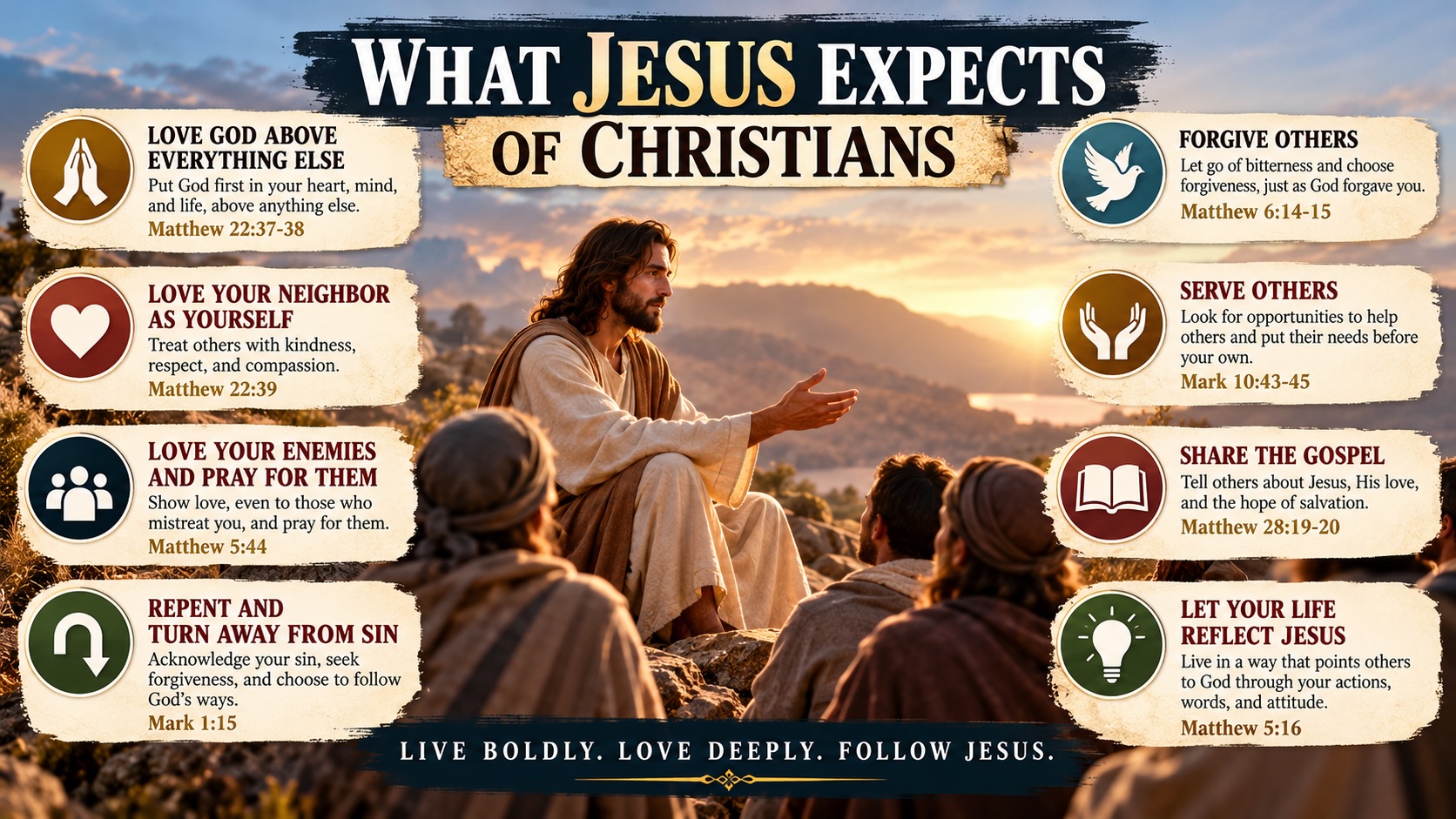
So what are Christians actually called to do? Jesus gave us clear instructions about how to live.
1. Love God Above Everything Else
Matthew 22:37–38
37 Jesus replied: “‘Love the Lord your God with all your heart and with all your soul and with all your mind.’ 38 This is the first and greatest commandment. – Matthew 22:37-38
God should come before money, success, political loyalties, social media, careers, and personal desires. Following Jesus means placing Him first, even when it requires sacrifice.
2. Love Your Neighbor as Yourself
Matthew 22:39
39 And the second is like it: ‘Love your neighbor as yourself.’ – Matthew 22:39
That includes people who disagree with your beliefs, live differently from you, or don’t believe in God. We should treat people with dignity and compassion because every person is created in God’s image.
3. Love Your Enemies and Pray for Them
Matthew 5:44
44 But I tell you, love your enemies and pray for those who persecute you, – Matthew 5:44
Jesus calls His followers to love their enemies and pray for those who persecute them. This doesn’t mean approving of mistreatment or allowing abuse. It means refusing to let hatred and revenge control our hearts.
4. Repent and Turn Away From Sin
Mark 1:15
15 “The time has come,” he said. “The kingdom of God has come near. Repent and believe the good news!” – Mark 1:15
Jesus preached repentance and belief in the good news. Christians should continually examine their own lives and turn away from wrongdoing. We cannot demand change from others while refusing to change ourselves.
5. Forgive Others
Matthew 6:14–15
14 For if you forgive other people when they sin against you, your heavenly Father will also forgive you. 15 But if you do not forgive others their sins, your Father will not forgive your sins. – Matthew 6:14-15
Jesus teaches the importance of forgiveness. Forgiveness doesn’t always mean reconciliation or restoring trust immediately. Healthy boundaries and accountability may still be necessary. But we should not allow bitterness to consume our hearts.
6. Serve Others
Mark 10:43–45
43 Not so with you. Instead, whoever wants to become great among you must be your servant, 44 and whoever wants to be first must be slave of all. 45 For even the Son of Man did not come to be served, but to serve, and to give his life as a ransom for many.” – Mark 10:43-45
Jesus taught that true greatness is found in serving others. Christianity isn’t about being recognized, praised, or admired. It’s about helping people, showing compassion, and serving God through our actions. There are many simple ways to serve God by serving others, and some of the most meaningful opportunities happen in our everyday lives.
7. Share the Gospel
Matthew 28:19–20
19 Therefore go and make disciples of all nations, baptizing them in the name of the Father and of the Son and of the Holy Spirit, 20 and teaching them to obey everything I have commanded you. And surely I am with you always, to the very end of the age.” – Matthew 28:19-20
Jesus commanded His followers to make disciples and teach others to obey His commands. We should share the good news of salvation through Christ. Not force people to believe. Not shame them into following Jesus. But explain the gospel faithfully and demonstrate Christ’s love.
8. Let Your Life Reflect Jesus
Matthew 5:16
16 In the same way, let your light shine before others, that they may see your good deeds and glorify your Father in heaven. – Matthew 5:16
Our actions should point people toward God. How we treat our spouses, children, parents, friends, coworkers, neighbors, and strangers matters. The way we behave when nobody is watching matters. And the way we speak to people online matters.
Our lives should reflect the Jesus we claim to follow.
Don’t Water Down Your Faith to Fit Into This World
There’s a difference between making Christianity understandable and changing Christianity to make it more acceptable.
- We should explain Scripture in ways people can understand.
- We should welcome questions.
- We should listen respectfully to people who disagree.
- But we should never deliberately change biblical teachings simply because society finds them uncomfortable.
The Bible Warns About People Rejecting Sound Teaching
2 Timothy 4:3–4 warns that people will turn away from sound teaching and seek teachers who tell them what they want to hear.
3 For the time will come when people will not put up with sound doctrine. Instead, to suit their own desires, they will gather around them a great number of teachers to say what their itching ears want to hear. 4 They will turn their ears away from the truth and turn aside to myths. – 2 Timothy 4:3-4
This warning is especially relevant when religious messages promise worldly success, personal comfort, or approval without addressing repentance, obedience, and salvation. Not every message that mentions God is biblical. Not every popular religious teacher is faithfully teaching Scripture. And not everything that feels good is spiritually good. The Bible also warns about what happens to false prophets and false teachers who deliberately mislead others.
Following Jesus Means Following His Teachings, Not Just the Parts We Like
John 14:15 connects love for Jesus with obedience to His commands.
15 “If you love me, keep my commands. – John 14:15
We cannot choose only the teachings that fit our personal preferences.
Jesus taught about love, forgiveness, mercy, and compassion. He also taught about sin, repentance, judgment, and the cost of discipleship. All of these teachings matter.
A faith that changes every time the world changes is no longer firmly rooted in God’s Word.
Unapologetically Christian: Standing Firm Without Compromising God’s Word
Being unapologetically Christian doesn’t mean believing we are always right about everything. It means refusing to be ashamed of Jesus Christ. It also means having enough humility to recognize when we are wrong, ask forgiveness, and continue growing spiritually.
Stop Fighting Every Battle on Social Media
Social media has become one of the biggest sources of arguments, division, and hostility. Christians sometimes feel obligated to respond to every criticism of Christianity or correct every person who expresses an unbiblical opinion. But is that really how Jesus wants us spending our time? Our phones and social media can also become distractions from God, taking our attention away from Jesus, our families, and the people who need us.
James 1:19–20 teaches us to be quick to listen, slow to speak, and slow to become angry.
19 My dear brothers and sisters, take note of this: Everyone should be quick to listen, slow to speak and slow to become angry, 20 because human anger does not produce the righteousness that God desires. – James 1:19-20
2 Timothy 2:23–25 warns against foolish arguments and instructs the Lord’s servant to be kind, gentle, and patient when correcting others.
23 Don’t have anything to do with foolish and stupid arguments, because you know they produce quarrels. 24 And the Lord’s servant must not be quarrelsome but must be kind to everyone, able to teach, not resentful. 25 Opponents must be gently instructed, in the hope that God will grant them repentance leading them to a knowledge of the truth, – 2 Timothy 2:23-25
Proverbs 15:1 teaches that a gentle answer can turn away wrath.
A gentle answer turns away wrath, but a harsh word stirs up anger. – Proverbs 15:1
Before responding to something online, ask yourself:
- Am I trying to help someone understand Jesus, or am I trying to win an argument?
- Am I responding from biblical truth or personal anger?
- Would I say these same words if the person were standing in front of me?
- Am I demonstrating the love of Christ?
- Is this conversation accomplishing anything good?
Sometimes standing firm means speaking up. Other times it means knowing when to walk away. You don’t have to respond to every arrow the world shoots at you.
How to Stand Firm in Your Faith Every Day
- Read your Bible. You cannot recognize false teaching if you don’t know what Scripture says.
- Pray regularly. Ask God for wisdom, courage, strength, patience, and discernment.
- Examine your own heart. Recognize your sins before focusing on the sins of others.
- Choose your influences carefully. Be mindful of what you watch, read, listen to, and allow to shape your beliefs.
- Speak the truth in love. Don’t be ashamed of Scripture, but don’t use it to humiliate people.
- Stand up for what is right. Defend people who are mistreated, refuse to participate in dishonesty, and do the right thing even when it’s difficult.
- Forgive others. Remember the grace and forgiveness God has shown you.
- Serve people. Look for opportunities to help others without expecting recognition.
- Share Jesus. Be willing to explain your faith when opportunities arise.
- Live what you believe. Let your actions demonstrate your commitment to Christ.
Stop Apologizing for Your Faith: Be Bold, Stand Firm, and Love Like Jesus
The world will continue to change. People’s opinions will change. Culture will change. What society considers acceptable will change. But God’s Word doesn’t change to accommodate popular opinion.
Hebrews 13:8 reminds us that Jesus Christ is the same yesterday, today, and forever.
8 Jesus Christ is the same yesterday and today and forever. – Hebrews 13:8
We don’t need to live in fear of the world. We don’t need to spend every day angry about what other people are doing. And we don’t need to compromise our faith to gain acceptance. We need to remember whom we serve.
Stand Firm, Be Courageous, Be Strong, and Do Everything in Love
I want to return to the Scripture that inspired this entire article.
1 Corinthians 16:13–14 (NIV)
“Be on your guard; stand firm in the faith; be courageous; be strong. Do everything in love.” – 1 Corinthians 16:13-14
These verses are a reminder of how Christians should approach life:
- Be alert to deception.
- Stand firm when your faith is challenged.
- Have the courage to speak the truth.
- Remain strong when life becomes difficult.
- But never forget the command to do everything in love.
If we stand for biblical truth but forget to love people, we aren’t fully following Jesus’ example. And if we claim to love people but refuse to stand for God’s truth, we aren’t fully following His teachings either.
Christianity isn’t for the weak because following Jesus requires courage, humility, self-control, sacrifice, forgiveness, and obedience. But we don’t have to accomplish these things through our own strength.
God equips us through His Word, His Spirit, and His grace.
- So put on the full armor of God.
- Stand firm in your Christian faith.
- Be bold enough to speak the truth.
- Be humble enough to recognize your own sins.
- And love people enough to show them who Jesus really is.
The world doesn’t need more angry Christians fighting with everyone. It needs Christians who have the courage to stand for Jesus and the love to live like Him.
Frequently Asked Questions About Being Bold and Standing Firm in Your Faith
Standing firm in your faith means remaining committed to Jesus Christ and biblical teachings despite temptation, criticism, opposition, or pressure to compromise. It involves trusting God, studying Scripture, praying, and living according to Jesus’ commands.
Christianity requires courage because following Jesus sometimes means rejecting popular opinions, resisting temptation, forgiving people who hurt us, and speaking biblical truth even when others disagree. Biblical courage also requires humility, patience, and love.
Ephesians 6:10–18 describes six pieces of spiritual armor: the belt of truth, breastplate of righteousness, readiness from the gospel of peace, shield of faith, helmet of salvation, and sword of the Spirit. Paul also emphasizes prayer. These help Christians resist spiritual deception and temptation.
Not necessarily. Scripture teaches Christians to recognize sin and gently correct fellow believers when appropriate. However, Jesus warns against hypocritical and self-righteous judgment in Matthew 7:1–5. Christians should speak biblical truth with humility and love rather than condemn people.
Some Christians are called hypocrites because their actions contradict the beliefs they profess. Jesus condemned religious hypocrisy in Matthew 23. However, struggling with sin does not automatically make someone a hypocrite. Christians are called to acknowledge wrongdoing, repent, seek forgiveness, and grow spiritually.
Christians remain capable of serious wrongdoing, and claiming to be Christian does not excuse evil behavior. Jesus warned that not everyone who claims to follow Him truly belongs to Him (Matthew 7:21–23). Only God fully knows a person’s heart, but wrongdoing must be addressed and accountability upheld.
Christians can demonstrate boldness by speaking biblical truth, refusing to compromise their faith, defending those who are mistreated, and sharing the gospel. 1 Peter 3:15 teaches believers to explain their hope with gentleness and respect.
Christians should respond with wisdom, patience, and respect rather than hatred or retaliation. They can explain their beliefs when appropriate, pray for those who oppose them, and recognize when walking away from an unproductive argument is the wisest choice.
No. Jesus commanded His followers to love others, but He also taught repentance and obedience to God. Christians can disagree with someone’s actions or beliefs while still treating that person with dignity, kindness, compassion, and respect.
You can grow stronger in faith by reading the Bible, praying, participating in a Christian community, resisting temptation, serving others, seeking spiritual guidance, and putting Jesus’ teachings into practice every day.