
The Power of Forgiveness: What the Bible Says About Letting Go and Moving Forward
Forgiveness can be one of the hardest things God asks us to do.
It is easy to talk about forgiveness when the hurt is small. It is much harder when someone betrayed you, lied to you, abandoned you, humiliated you, broke your trust, hurt your family, or left wounds that still affect your life years later.
And sometimes the person you cannot forgive is yourself.
Maybe you have made decisions you wish you could undo. Maybe you hurt someone you loved. Maybe you wasted years of your life. Maybe you knew better and did it anyway. You cannot go backward and rewrite what happened.
But with God, your past does not have to control your future. Forgiveness doesn’t erase your story. It changes what power that story has over you.
“Be kind and compassionate to one another, forgiving each other, just as in Christ God forgave you.” — Ephesians 4:32
What Is Forgiveness According to the Bible?
Biblical forgiveness is more than saying, “It’s okay.” Sometimes what happened wasn’t okay at all.
Forgiveness is choosing to release the debt you believe another person owes you and surrendering your anger, bitterness and desire for revenge to God.
- It does not mean calling evil good.
- It does not mean forgetting.
- It does not mean pretending you weren’t hurt.
- And it does not mean the person who hurt you should escape the consequences of what they did.
Forgiveness means refusing to allow what someone did to you to control the rest of your life.
Why Is Forgiveness So Powerful?
Unforgiveness can keep us emotionally connected to the very thing we desperately want to escape.
- We replay conversations.
- We imagine what we should have said.
- We wonder why they did it.
- We wait for an apology that may never come.
- We want them to understand how badly they hurt us.
Before long, something that happened years ago can still affect relationships, decisions, emotions and even the way we see ourselves. Forgiveness begins breaking that hold.
You may still remember what happened, but remembering something is different from continuing to live inside it.
The Power of Forgiveness in Three Steps:
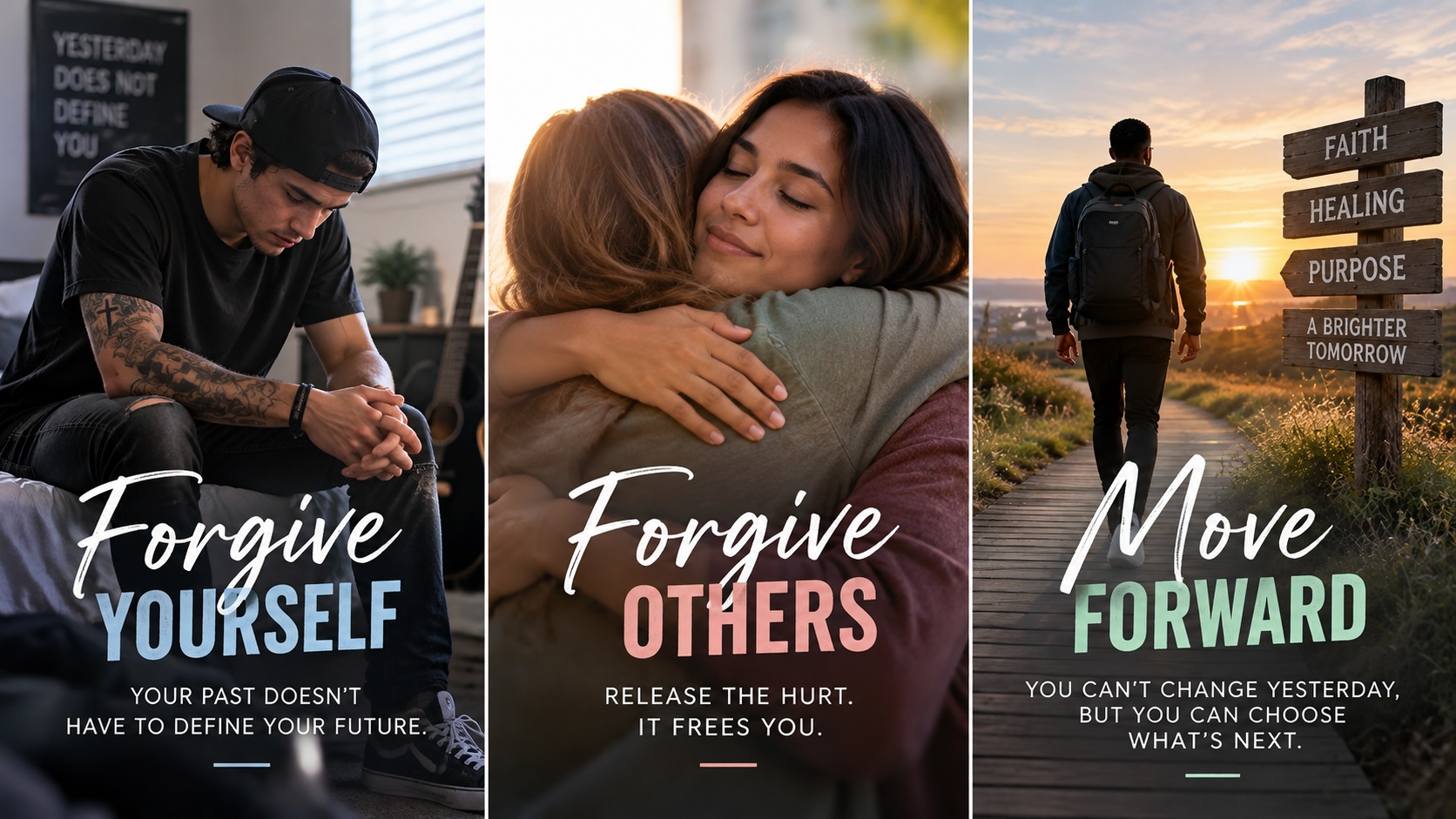
Step One: Forgive Yourself
Sometimes forgiving other people is easier than forgiving ourselves.
I know this personally. I have done things in my life that I am not proud of. For years, I carried those burdens around with me. I may have hidden them well from other people, but I couldn’t hide them from myself—or from God. I struggled with guilt, shame and my own sense of worth. I couldn’t forgive myself for my past.
Eventually, I fell to my knees and cried out to my Father in Heaven. I asked Him for forgiveness. And something became very clear to me:
If God could forgive me, why was I continuing to punish myself?
That didn’t erase what I had done. It didn’t mean there weren’t consequences. And it didn’t mean I suddenly forgot my past. It meant my past no longer had to define who I was becoming.
Can God Really Forgive What I’ve Done?
Yes! One of the central messages of the Gospel is that forgiveness is available because of Jesus Christ.
“If we confess our sins, he is faithful and just and will forgive us our sins and purify us from all unrighteousness.” — 1 John 1:9
You may believe what you did was too terrible. God already knows. You may believe you waited too long. God already knows. You may believe you don’t deserve forgiveness. That is exactly why grace is grace.
Forgiveness isn’t something we earn by punishing ourselves long enough. We receive it. And then we begin learning from the past instead of continuing to live under it.
Ask yourself:
- What has God taught me through this?
- How can I live differently now?
- Could what I learned someday help someone else?
Your worst mistake does not have to become the final chapter of your life.
“For I will forgive their wickedness and will remember their sins no more.” — Jeremiah 31:34
When God says He will “remember their sins no more,” it doesn’t mean God suddenly loses knowledge of our past. It means He no longer holds those forgiven sins against us. If God has forgiven what you have confessed and surrendered to Him, continuing to define yourself by that sin keeps you chained to something God has already forgiven.
Step Two: Forgive Others
Forgiving yourself is difficult. Forgiving someone who hurt you can be even harder. Some wounds come from the people we trusted most.
- Parents can fail us.
- Spouses can betray us.
- Friends can turn against us.
- Children can hurt us.
- Family members can lie, manipulate or abandon us.
- Sometimes strangers hurt us.
- Sometimes churches hurt us.
- Sometimes people who claimed to love us leave wounds that take years to understand.
The Bible doesn’t deny that reality. Yet Jesus repeatedly taught about forgiveness.
“For if you forgive other people when they sin against you, your heavenly Father will also forgive you.” — Matthew 6:14
Forgiveness doesn’t necessarily begin with a feeling. Sometimes it begins with a decision:
God, I don’t know how to let this go, but I don’t want this hurt controlling me anymore. Help me forgive.
You may have to pray that prayer more than once!
Forgiveness Does Not Mean What Happened Was Okay
This is important. Christians sometimes hear “you need to forgive” and interpret it as: Forget about it. Stop talking about it. Trust them again. Go back. Give them another chance.
That isn’t necessarily what biblical forgiveness requires.
- You can forgive someone and still recognize that what they did was wrong.
- You can forgive and establish boundaries.
- You can forgive and decide that someone should no longer have the same access to your life.
- You can forgive and still allow appropriate legal or personal consequences.
- You can forgive someone you never speak to again.
Forgiveness releases revenge. It does not eliminate wisdom.
Forgiveness and Trust Are Not the Same Thing
Forgiveness can be given. Trust has to be built.
If someone repeatedly lies to you, forgiving them does not require you to immediately believe everything they say. If someone repeatedly betrays you, forgiveness doesn’t automatically restore the relationship to what it was before. Trust may return slowly through honesty, repentance, changed behavior and time. Or it may never fully return.
That doesn’t mean you failed to forgive. It means trust and forgiveness are two different things.
Forgiveness Does Not Always Mean Reconciliation
Reconciliation requires more than one person. You can choose forgiveness yourself. Reconciliation requires both people to participate. Healthy reconciliation normally involves truth, repentance, accountability and a genuine willingness to change. Sometimes reconciliation happens. Sometimes it doesn’t.
Romans 12:18 says:
“If it is possible, as far as it depends on you, live at peace with everyone.”
Notice the words “if it is possible.” There are circumstances where restoring a relationship may not be wise or safe. You can forgive someone while maintaining distance.
What If the Person Never Apologizes?
This may be one of the hardest situations of all.
- What if they don’t care?
- What if they never admit what they did?
- What if they believe they did nothing wrong?
- What if they are no longer alive?
If your ability to forgive depends entirely upon receiving an apology, that person still has enormous control over your peace. You can bring the hurt to God even when an apology never comes. You don’t need someone else’s cooperation to begin releasing bitterness from your own heart.
What If I Forgive Them and I’m Still Angry?
Forgiveness isn’t always instantaneous. You can sincerely choose to forgive someone and still feel hurt when you remember what happened. Healing takes time.
There may be days when you believe you have completely moved past something and then a memory, conversation, photograph or situation brings the emotions back. That doesn’t necessarily mean you haven’t forgiven. It may simply mean the wound is still healing.
When those feelings return, bring them back to God. Forgiveness can be a decision you make once and then continue walking out over time.
“Bear with each other and forgive one another if any of you has a grievance against someone. Forgive as the Lord forgave you. And over all these virtues put on love, which binds them all together in perfect unity.” — Colossians 3:13–14
Paul connects forgiveness directly to the forgiveness we have already received from God. He doesn’t say we forgive because the other person deserves it. We forgive “as the Lord forgave you.” Then Paul takes it one step further and points us toward love. Forgiveness releases what we are holding against someone; love changes how we choose to treat people moving forward.
Step Three: Move Forward
You cannot change yesterday. But yesterday doesn’t have to own tomorrow. Moving forward doesn’t mean pretending your past never happened. Your experiences become part of your story.
The question becomes:
What will you allow God to do with that story?
One of the greatest biblical examples is Joseph.
Joseph: Hurt, Betrayal and Forgiveness
Joseph had every reason to be bitter. His own brothers hated him, plotted against him and sold him into slavery.
He was taken away from his home and family. Later, he was falsely accused and imprisoned. Years passed.
Eventually, Joseph rose to a position of tremendous authority in Egypt. Then the brothers who had betrayed him appeared before him needing food during a famine.
Joseph suddenly had power over the very people who once had power over him. He could have taken revenge. He didn’t.
Joseph eventually told his brothers:
“You intended to harm me, but God intended it for good to accomplish what is now being done, the saving of many lives.” — Genesis 50:20
Notice something important. Joseph didn’t say his brothers’ actions were good. They intended harm.
God didn’t need Joseph to pretend otherwise. Instead, Joseph recognized something far more powerful:
The evil someone intended against him could not stop God from working in his life.
That’s very different from saying God approves of the terrible things people do to us. People can make sinful, selfish and destructive choices. Yet God can still work through the wreckage.
Your pain does not have to be wasted.
Forgiveness Doesn’t Change the Past—It Changes Your Future
- You may never receive the apology you deserved.
- You may never understand why someone treated you the way they did.
- You may never recover everything that was taken from you.
But you can decide that their actions will not determine who you become.
Forgiveness isn’t giving the person who hurt you another victory. It is refusing to give them the rest of your life.
“So in everything, do to others what you would have them do to you.” — Matthew 7:12
The Golden Rule becomes especially challenging when someone has treated us badly. Our natural response is often to give back what we received—anger for anger, rejection for rejection, cruelty for cruelty. Jesus calls us to something different. We don’t have to become like the person who hurt us. Forgiveness gives us the freedom to choose how we respond rather than allowing someone else’s behavior to determine ours.
How Do I Start Forgiving Someone?
Start honestly. You don’t need impressive words. Tell God exactly what happened and exactly how you feel.
God, they hurt me.
I’m angry.
I don’t understand why this happened.
Part of me doesn’t want to forgive them.
But I don’t want bitterness controlling my heart.
Help me do what I cannot do on my own.
Then keep bringing it to Him. Forgiveness may happen in a moment. Healing may take much longer.
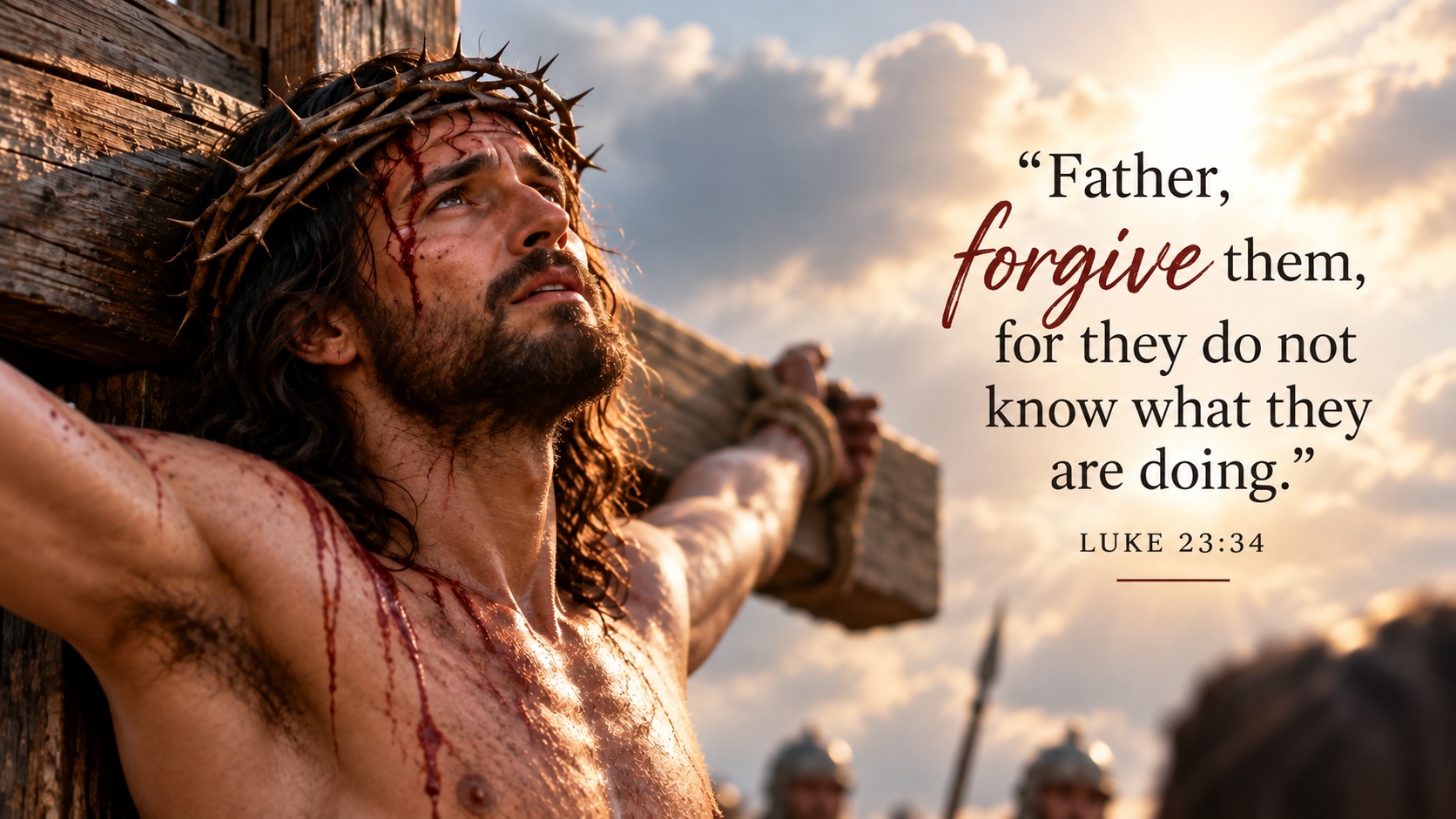
What Jesus Shows Us About Forgiveness and How To Forgive Someone Who Hurt You
The greatest picture of forgiveness in the Bible is Jesus Himself.
While being crucified, Jesus said:
“Father, forgive them, for they do not know what they are doing.” — Luke 23:34
Jesus wasn’t speaking from a place where no wrong had occurred. He had been betrayed, falsely accused, mocked, beaten and crucified.
Yet hatred didn’t have the final word. Forgiveness did.
And through Jesus, forgiveness is also offered to us.
You Don’t Have to Carry It Forever
Maybe someone hurt you years ago and you are still carrying it. Maybe the person you need to forgive is sitting across the room from you. Maybe they haven’t been part of your life for decades. Maybe the person you need to forgive is the person staring back at you in the mirror.
You don’t have to pretend it didn’t hurt. You don’t have to call wrong right. You don’t have to restore every relationship. But you also don’t have to carry bitterness, shame and resentment forever.
Give it to God.
- Ask Him to help you forgive.
- Ask Him to heal what was damaged.
- Ask Him for wisdom about boundaries and relationships.
Then take the next step forward.
Your story isn’t over.
And what happened to you—or what you did in your past—doesn’t have to determine where God takes you next.
Frequently Asked Questions About Forgiveness
The Bible teaches Christians to forgive others because God has forgiven us through Christ. Ephesians 4:32 tells believers to forgive one another “just as in Christ God forgave you.”
No. Forgiveness and trust are different. Forgiveness can be given, while trust usually has to be rebuilt through honesty, changed behavior and time.
Yes. Forgiveness does not require you to continually expose yourself to harmful behavior. Healthy boundaries can exist alongside genuine forgiveness.
Not necessarily. Forgiveness can be an individual decision, while reconciliation requires cooperation from both people. Some relationships can be restored; others may require permanent distance.
You can still begin forgiving them. Waiting for another person’s apology can leave your peace dependent upon something you cannot control.
No. Biblical forgiveness does not require memory loss or pretending an offense never occurred. Remembering what happened can sometimes help you establish wiser boundaries in the future.
Guilt can convince us that continuing to punish ourselves somehow makes up for the past. But when we genuinely confess our sins, Scripture teaches that God forgives us. We can learn from our mistakes without allowing shame to define us.
When Peter asked Jesus whether forgiving someone seven times was enough, Jesus answered, “seventy-seven times” in Matthew 18:21–22. The point was not to establish a forgiveness counter but to teach that forgiveness should characterize the life of a believer.
A Final Thought – Forgiveness and Healing
There is something you cannot change: What happened.
But there is something you can change: What you carry forward.
Forgiveness does not make the past disappear. It loosens the past’s grip on your future and how to let go of resentment.
You may not be able to do it entirely on your own. That’s okay.
Start with God.
“Lord, help me forgive.”
Sometimes that simple prayer is where freedom begins.